报告题目:Translating Downscaled Climate Data into Impact Assessment and Policy Recommendations for South Asia
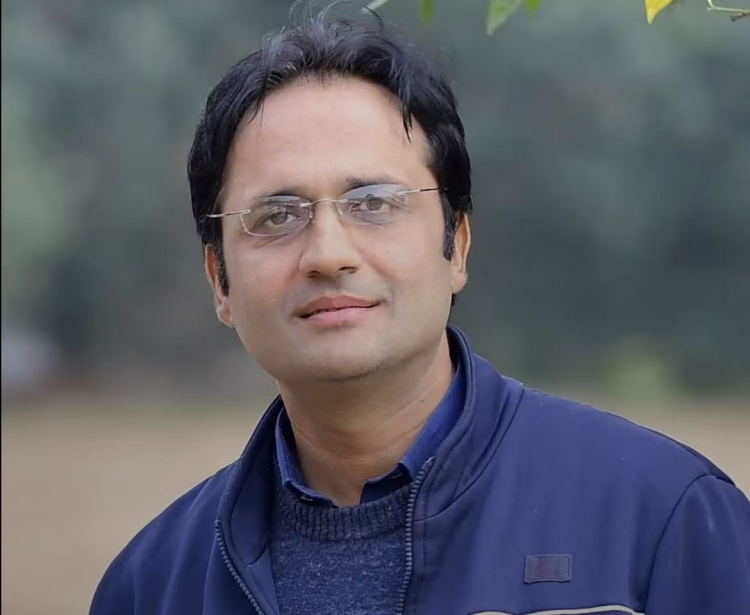
报 告 人:Dr. Shaukat Ali
单 位:the Centre of Global Child Health, SickKids Hospital, Toronto, Canada
Global Climate-Change Impact Studies Centre, Ministry of Climate Change, Government of Pakistan
邀 请 人:丹利 研究员
时 间:2025年12月31日上午10:00
地 点:2号楼319会议室
报告摘要:
This work is part of the Asia-Pacific Network for Global Change Research (APN) project "Towards Robust Projections of Climate Extremes and Adaptation Plans over South Asia" (CRRP2018-04MY-Ali), which implements an end-to-end workflow linking climate data generation, model evaluation, downscaling, impact assessment and policy-relevant recommendations for Pakistan.
First, we developed a high-resolution (5 km) reference gridded dataset by applying quality control to station observations and integrating them with ERA5 reanalysis via spatial interpolation. In areas with sufficient station coverage, ERA5 data were excluded to prioritize the observations. To better capture elevation-dependent temperature gradients in data-sparse mountainous regions, we refined temperature fields from the estimated lapse-rate-of-temperature (LRT) approach and using GTOPO30.
Next, we evaluated 48 CMIP6 models against this reference dataset and selected the top five based on their skill in reproducing key regional climate characteristics. These models were downscaled and bias-corrected using Spatial Disaggregation Quantile Delta Mapping (SDQDM) to minimize systematic errors, address non-stationarity and preserve climate change signals.
Finally, the 5 km reference data and downscaled CMIP6 projections were used to quantify climate extremes and support sectoral impact assessments particularly for health system impacts. The findings were translated into risk-relevant metrics to inform climate-resilient health policies and actionable adaptation priorities for Pakistan, aligned with frameworks such as the Lancet Countdown.
Overall, the research demonstrates a complete cycle of climate data development, impact assessments and evidence-based policy guidelines for adaptation planning.
Keywords: Downscaling, impact assessments, Weather extremes, Health impacts and policy recommendations
报告人简介:
Shaukat Ali hold a PhD in Meteorology, also an LLB specializing in Environmental Law. Over two decades, he is focusing on high resolution climate modelling, future climate projections, extreme events, impact assessment and climate change and health. He has implemented capacity-building initiatives and projects to empower researchers and students specially promoting female involvement through workshops, hands-on training sessions, university lectures, and courses. He has actively communicated the scientific findings of my publications to policymakers and the general public through television and radio interviews, news articles in the newspapers and policy briefs. Ali contributions extend globally, having served as a Visiting Research Scholar at different institutions such as the Abdus Salam International Centre for Theoretical Physics (ICTP) in Trieste, Italy, the International Institute for Applied Systems Analysis (IIASA) in Vienna, Austria, the Chinese Academy of Sciences in Beijing, China, and the APEC Climate Center (APCC) in Busan, Korea. Ali serves as the Point of Contact for Central Asia for the CORDEX (Coordinated Regional Climate Downscaling Experiment) project under the WCRP (World Climate Research Program).